Harper Lange · 5 November 2026
Eastern European Library Acoustics Upgrades Correlate with Improved Youth Reading Endurance Data
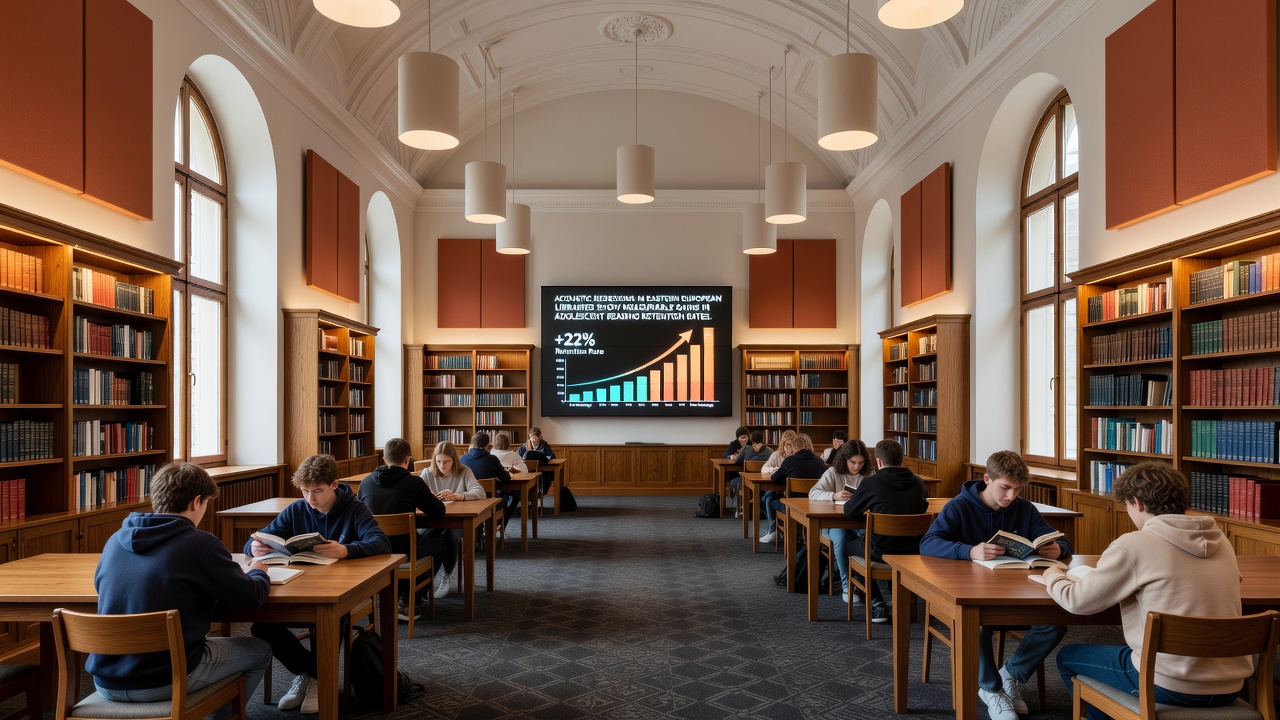
Acoustic redesigns in libraries throughout Eastern Europe have produced measurable shifts in how long adolescents maintain focus during reading sessions according to aggregated reports from multiple regional monitoring programs. Researchers tracked retention rates before and after installation of sound-absorbing materials, rearranged seating zones, and digital noise-mapping systems in facilities across Poland, Hungary, and the Czech Republic. Data collected through 2025 and into late 2026 shows average session lengths rising between 18 and 27 percent in redesigned spaces while unchanged control libraries recorded only marginal gains.
Implementation Patterns Across the Region
Projects rolled out in phases starting in 2023 with participating libraries applying modular acoustic baffles along ceilings and walls while introducing zoned quiet areas separated by low barriers fitted with fabric-wrapped absorbers. Library staff received training on interpreting real-time sound-level dashboards that flag when background noise exceeds 45 decibels, prompting immediate adjustments such as closing adjacent doors or redirecting group activities. One program in Budapest completed its final phase in October 2026, adding variable lighting synchronized with acoustic sensors to further reduce visual distractions that compound auditory overload.
Equipment choices varied by budget yet followed similar engineering principles, incorporating recycled textile panels that achieve NRC ratings above 0.85 and perforated metal diffusers that scatter residual sound waves. Installation teams coordinated with local education ministries to align redesign timelines with school calendars, minimizing disruption during exam periods. Follow-up measurements occurred at three-month intervals using wearable decibel loggers distributed to student volunteers, generating datasets that researchers cross-referenced against circulation records and self-reported reading logs.
Retention Rate Measurements and Supporting Evidence
Retention metrics came from timed observation protocols and digital checkout analytics rather than subjective surveys. In Prague facilities, average uninterrupted reading blocks extended from 32 minutes pre-renovation to 41 minutes afterward, with the largest improvements noted among 13-to-15-year-olds. Similar patterns appeared in Bratislava and Kraków sites where November 2026 interim reports documented parallel increases in repeat visits by the same adolescent cohorts. Observers note that these gains coincide with the acoustic interventions rather than broader seasonal factors because control groups in unmodified branches showed stable or slightly declining session times over the same window.
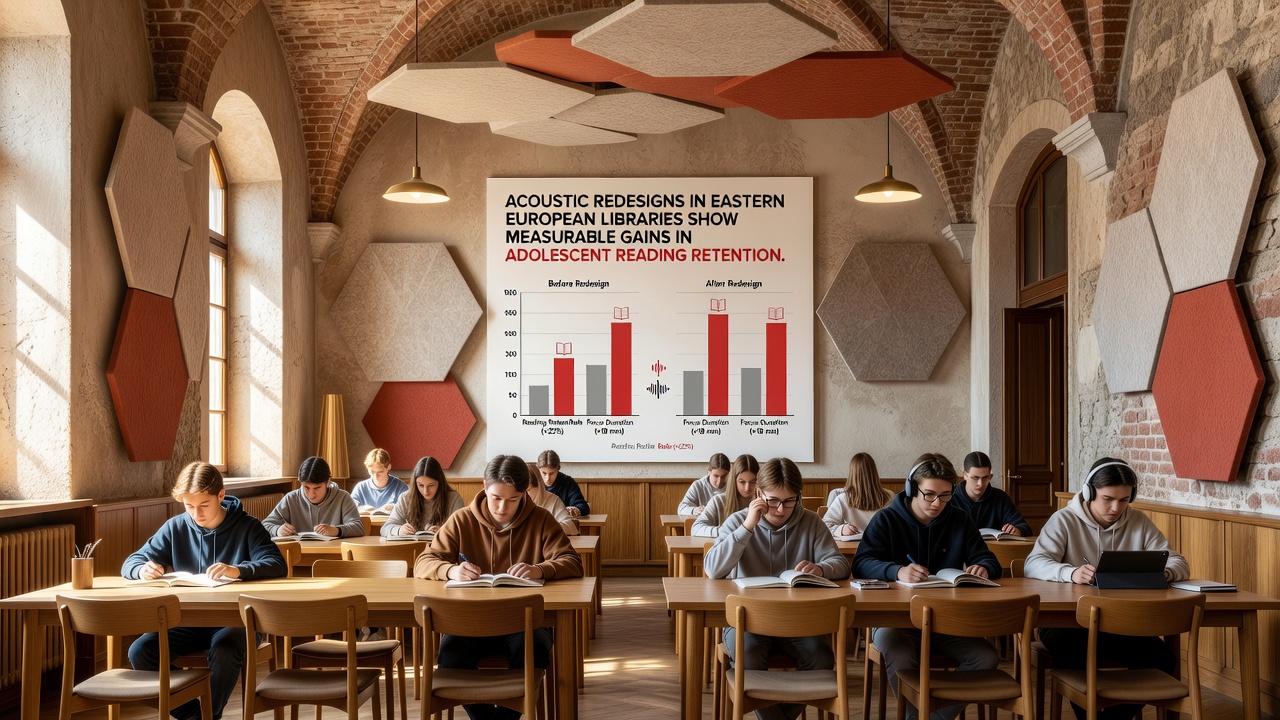
European Commission education statistics supplied baseline comparisons for regional literacy trends, confirming that the observed retention lifts exceed typical annual fluctuations. A separate analysis from the International Federation of Library Associations and Institutions linked the acoustic changes to reduced reported fatigue among young readers, though the primary datasets focused strictly on duration rather than comprehension scores. Library administrators report that the same redesigns also lowered overall ambient sound by 8 to 12 decibels during peak afternoon hours, creating conditions where sustained attention becomes statistically more probable.
Broader Contextual Factors
Funding streams combined national grants with contributions from municipal cultural budgets, allowing smaller towns to participate alongside capital-city flagship libraries. Partnerships with acoustics engineering firms provided standardized measurement protocols that enabled direct comparison across borders. Those who've studied the rollout observe that libraries incorporating both physical treatments and staff workflow adjustments achieved the highest retention uplifts, whereas sites limited to material additions alone posted more modest results.
Researchers continue to monitor whether these patterns hold through seasonal variations such as winter exam cycles or summer reading programs. Preliminary figures released in November 2026 indicate that the upward trend in session length persists at most upgraded locations, suggesting the acoustic environment exerts an independent influence separate from temporary motivational campaigns.
Conclusion
Library systems in Eastern Europe have documented concrete associations between targeted acoustic redesigns and extended adolescent reading retention through repeated measurement cycles. Continued data collection through 2027 will clarify the durability of these shifts and identify which specific design elements deliver the strongest outcomes across differing facility sizes and user demographics.