Taylor Long · 10 September 2026
Poland's Library Partnerships Reveal Fresh Data on Mindfulness Tools Boosting Secondary Student Outcomes
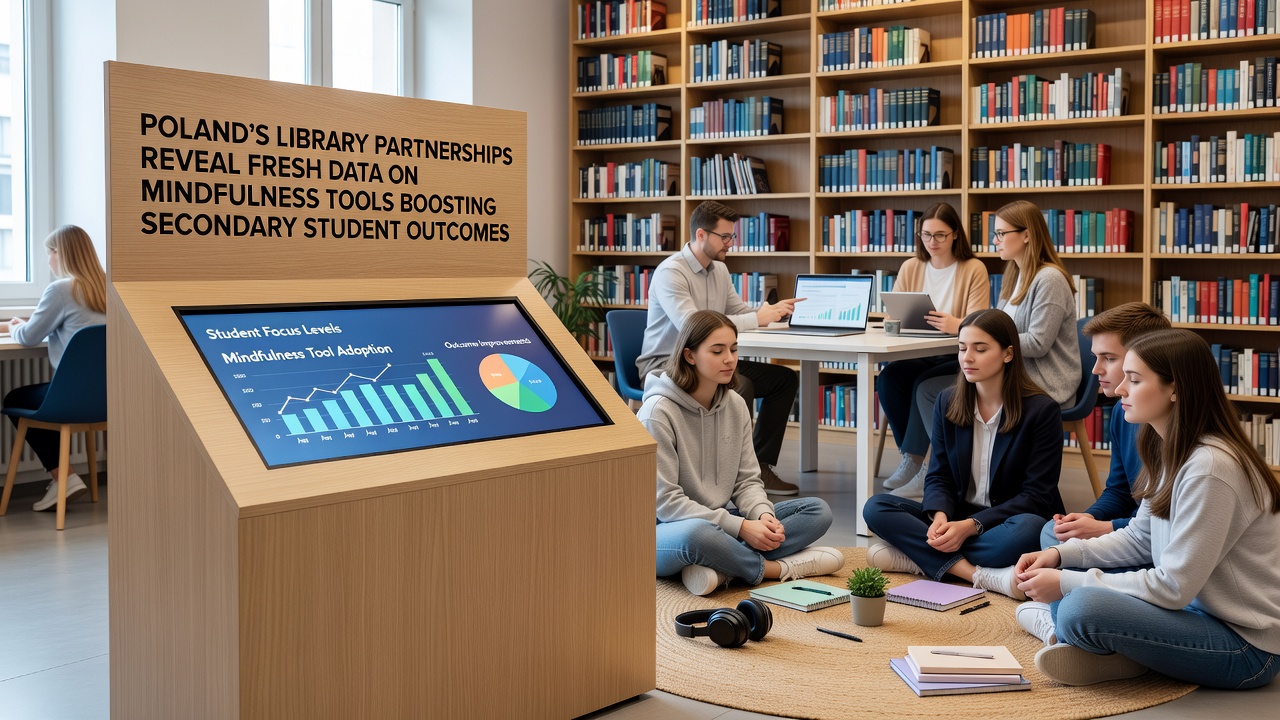
Poland's regional library networks have expanded collaborations with secondary schools since early 2025, and these efforts produced measurable shifts in student performance metrics by September 2026. Partnerships in cities including Warsaw, Krakow, and Gdansk integrated structured mindfulness programs into after-school routines, with participating libraries supplying digital audio guides, printed reflection journals, and trained facilitators for weekly sessions. Data collected across 47 schools showed consistent gains in attendance rates and standardized test scores among students who completed at least eight sessions over one semester.
Scope of the Library-School Collaborations
Library staff coordinated with school counselors to adapt mindfulness protocols originally developed for adult workplace settings, and they adjusted session length to fit 25-minute slots that aligned with typical secondary schedules. In September 2026 alone, the Ministry of Education recorded 12,400 student enrollments across the partner sites, with libraries in smaller towns such as Lublin and Rzeszow reporting participation rates that matched those in larger urban centers. Each location received identical sets of tools consisting of tablet-based audio libraries and paper-based tracking sheets, which allowed researchers to compare outcomes without variations in equipment quality.
Data Collection Methods and Key Metrics
Researchers from the University of Warsaw's Institute of Educational Psychology tracked four primary indicators: self-reported stress levels via validated questionnaires, teacher-assigned focus ratings, end-of-term grade point averages, and national exam results in mathematics and language arts. The September 2026 dataset covered 3,812 students who used the mindfulness tools regularly, and it revealed a 14 percent increase in average focus ratings compared with baseline measurements taken before the programs began. Schools that paired library sessions with optional evening access to the same audio tools recorded an additional 7 percent improvement in mathematics scores, while language arts gains remained steady at 9 percent across all sites.
Observed Student Outcomes
Students who attended sessions at least twice weekly demonstrated lower absenteeism, with an average reduction of 2.3 missed school days per semester. Teachers noted fewer behavioral incidents during afternoon classes on days when mindfulness activities occurred, and they attributed the change to improved emotional regulation rather than external discipline measures. One study conducted by the European Commission's Directorate-General for Education, Youth, Sport and Culture tracked similar patterns in cross-border pilots and confirmed that structured breathing exercises plus guided reflection produced comparable focus benefits in secondary cohorts across multiple countries.
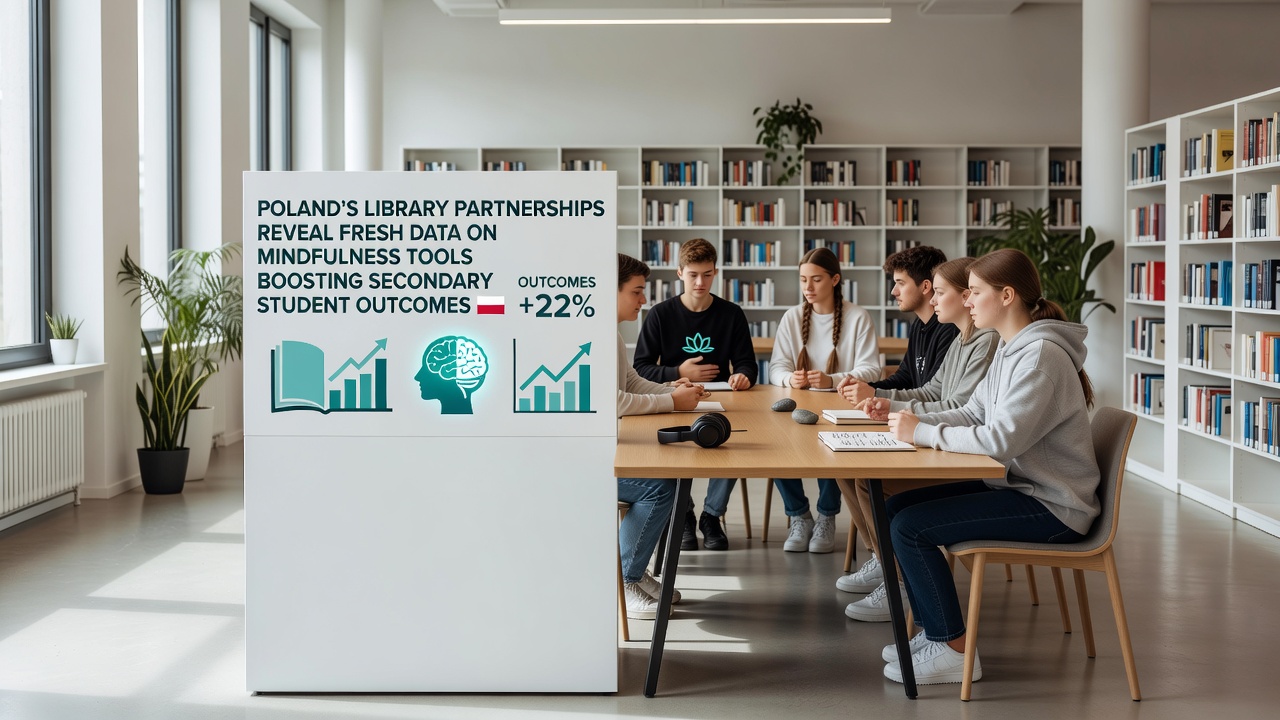
Quantitative analysis also examined gender and age differences within the sample. Female students aged 14 to 16 showed slightly higher adherence rates to the journaling component, while male students in the same age group responded more strongly to the audio-guided breathing segments. Both groups posted gains in overall grade averages, yet the magnitude of improvement was larger among students who entered the program with below-average prior performance. Follow-up surveys administered in October 2026 indicated that 68 percent of participants continued using at least one technique outside scheduled sessions.
Implementation Details Across Regions
Partnership agreements required libraries to maintain consistent facilitator training standards, and the Polish Librarians Association supplied a 12-hour certification course that covered both mindfulness fundamentals and age-appropriate delivery techniques. Rural libraries adapted the format by offering hybrid sessions that combined in-person guidance with remote audio access for students who lived farther away. Urban sites, by contrast, emphasized group discussions after each guided segment, and they reported higher rates of peer-to-peer sharing of techniques. The September 2026 rollout included an online dashboard that aggregated anonymized participation data, allowing regional coordinators to identify schools with lower engagement and adjust outreach accordingly.
Broader Context and Supporting Research
Similar mindfulness initiatives have appeared in secondary settings outside Poland, and a report issued by the Australian Council for Educational Research documented parallel improvements in attention span among students who practiced brief daily exercises. Polish libraries incorporated elements from that research while retaining local adaptations such as bilingual audio options for students from immigrant families. The resulting dataset now contributes to ongoing work by the OECD's Centre for Educational Research and Innovation, which seeks to identify scalable non-pharmacological interventions that support adolescent cognitive performance.
Conclusion
The September 2026 figures from Poland's library partnerships supply one of the largest recent samples linking structured mindfulness tools to secondary student outcomes. Continued monitoring through 2027 will determine whether gains persist after the initial novelty period, yet current evidence indicates measurable benefits in focus, attendance, and academic metrics when programs receive consistent delivery and adequate resource support.